


Pilates for Menopause in Newcastle: Strength, Balance and Better Health After 40

If you're finding that your body feels different during perimenopause or menopause, you're not imagining it.
Many women notice changes in strength, energy levels, sleep, balance, body composition, mood and recovery. These changes are often linked to hormonal fluctuations, particularly declining oestrogen levels, which can affect muscle mass, bone health, tendons, the pelvic floor and cardiovascular health.
At Perkins Physiotherapy & Pilates in Adamstown, we work with women from Newcastle, New Lambton, Merewether, Kotara, Charlestown and surrounding suburbs who want to feel stronger, move better and stay active throughout midlife and beyond.
The good news? Research shows that regular exercise, including Pilates, can play an important role in managing symptoms and supporting long-term health during and after menopause.
Why Exercise Is So Important During Menopause
Menopause is associated with several significant changes in the body, including:
Reduced muscle mass and strength (sarcopenia)
Reduced bone density
Increased risk of osteoporosis
Joint pain and stiffness
Increased falls risk
Pelvic floor dysfunction
Sleep disturbances
Increased cardiovascular disease risk
While menopause is a natural stage of life, these changes can affect everyday activities, confidence and overall quality of life.
This is why exercise during menopause isn't simply about fitness. It's about maintaining strength, independence and health for the future.
How Pilates Can Help During Menopause
1. Pilates Improves Strength

Strength training becomes increasingly important as we age, particularly during and after menopause when muscle loss naturally accelerates.
A study by Bergamin et al. (2015) found that Pilates significantly improved upper limb, lower limb and abdominal strength in post-menopausal women.
Stronger muscles help support joints, improve posture, reduce injury risk and make everyday tasks easier.
At Perkins Physiotherapy & Pilates, our physiotherapist-led Pilates sessions are designed to build strength safely, whether you're new to exercise or have been active for years.
2. Pilates Improves Balance and Stability
Balance often declines with age, increasing the risk of falls and injury.
Research by Campos de Oliveira et al. (2015) found that regular Pilates training improved postural balance and functional strength while also enhancing quality of life.
Many women tell us they feel steadier, more coordinated and more confident moving around after participating in regular Pilates sessions.
This is particularly important for maintaining independence and reducing falls risk as we age.
3. Pilates Supports Bone Health
Declining oestrogen levels can accelerate bone loss during menopause, increasing the risk of osteoporosis.
While weight-bearing exercise remains critical for bone health, Pilates can complement these activities by improving:
Strength
Posture
Stability
Movement control
Balance
For women with osteopenia or osteoporosis, our physiotherapists can modify exercises to ensure they are safe and appropriate.

4. Pilates Can Help Reduce Menopause Symptoms
An eight-week Pilates programme studied by Lee et al. (2016) demonstrated improvements in:
Menopausal symptoms
Lumbar strength
Flexibility
While Pilates won't stop menopause, it can help women feel stronger, more mobile and more comfortable in their bodies during this transition.
5. Pilates Supports Pelvic Floor Health
Changes in hormones during menopause can contribute to:
Bladder leakage
Urinary urgency
Pelvic floor weakness
Vaginal discomfort
Pelvic floor muscle training has been shown to improve pelvic floor function and may assist in managing symptoms associated with Genitourinary Syndrome of Menopause (GSM).
As a physiotherapy clinic, we understand the importance of pelvic floor health and can provide individualised guidance alongside your Pilates programme.
6. Pilates Helps Manage Stress and Improve Wellbeing
Menopause impacts more than just physical health.
Many women experience:
Increased stress
Anxiety
Brain fog
Poor sleep
Reduced confidence
One of the unique benefits of Pilates is its focus on breath control and mindful movement.
Using focused breathing and controlled exercise can help calm the nervous system and create valuable time to reconnect with your body.
For many of our clients, Pilates becomes an important form of self-care as well as exercise.
Why Women Choose Perkins Physiotherapy & Pilates
Not all Pilates classes are the same.
At Perkins Physiotherapy & Pilates in Adamstown, our approach is grounded in evidence-based physiotherapy and tailored to your individual goals.
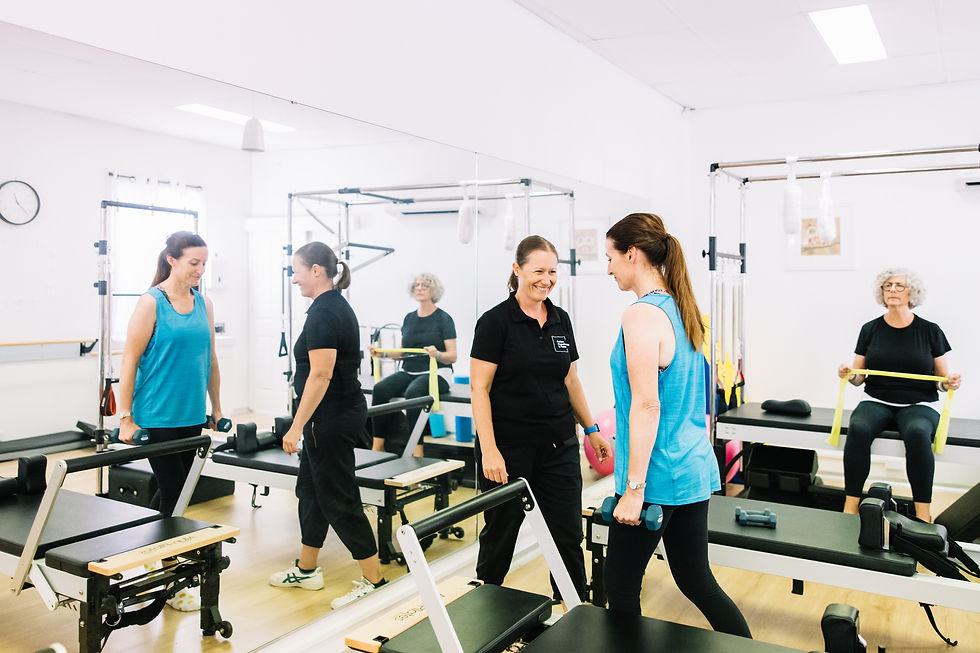
Whether you're experiencing perimenopause symptoms, managing osteoporosis, recovering from injury or looking to improve strength after 50, we create programmes that are appropriate for your body and your stage of life.
Our clients appreciate:
✓ Small, supportive sessions
✓ Individualised exercise programs
✓ Physiotherapist-led guidance
✓ A welcoming environment
✓ Focus on long-term health and healthy ageing
Pilates for Menopause in Adamstown, Newcastle
Menopause isn't a signal to slow down.
In many ways, it's the perfect time to prioritise your health, strength and future wellbeing.
Research shows that Pilates can improve strength, balance, flexibility and quality of life during and after menopause. Combined with expert physiotherapy guidance, it can help you feel more confident, capable and connected to your body.
If you're looking for Pilates for menopause in Newcastle, we'd love to help.
Book an initial assessment with Perkins Physiotherapy & Pilates in Adamstown and discover how a personalised Pilates programme can support your health through perimenopause, menopause and beyond.
Book a discovery call or contact Anna on 0412 634 966

Frequently Asked Questions
Can Pilates help menopause symptoms?
Research suggests Pilates may improve strength, flexibility, balance and overall quality of life while helping reduce some menopause-related symptoms.
Is Pilates good for osteoporosis during menopause?
Pilates can help improve strength, posture and balance. Women with osteoporosis should have individual assessment and appropriate exercise modifications.
Can Pilates help pelvic floor weakness after menopause?
Pilates incorporates core and pelvic floor activation and can be an effective part of a broader pelvic health program.
Where can I do Pilates for menopause in Newcastle?
Perkins Physiotherapy & Pilates in Adamstown offers physiotherapist-led Pilates sessions tailored to women experiencing perimenopause and menopause.
References
Bergamin, M. et al. (2015). Effects of a Pilates exercise program on muscle strength, postural control and body composition in postmenopausal women.
Campos de Oliveira, L. et al. (2015). Effects of Pilates on muscle strength, postural balance and quality of life of older adults: A randomised controlled trial.
Lee, J. et al. (2016). Effects of an 8-week Pilates exercise program on menopausal symptoms, lumbar strength and flexibility in postmenopausal women.


Comments